Process
HOW A BELLCRAFT IS CREATED
It stems from the concept of a hull design that, without departing radically from those currently in use in Italy, is better suited for speeds of around 30 knots while planing, while also maintaining excellent maneuverability at lower speeds. While we took into account the hull designs used for similar vessels in Northern Europe, we also kept in mind the specific characteristics of the Mediterranean Sea, where the majority of our boats operate.
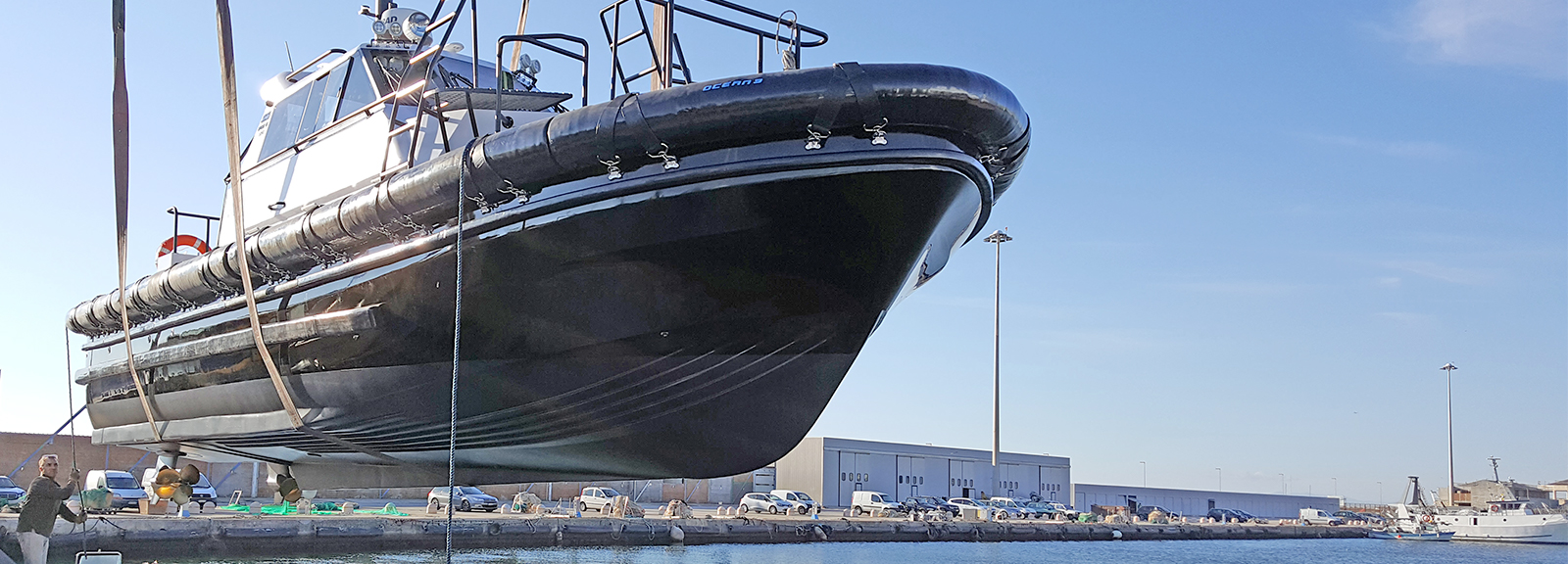
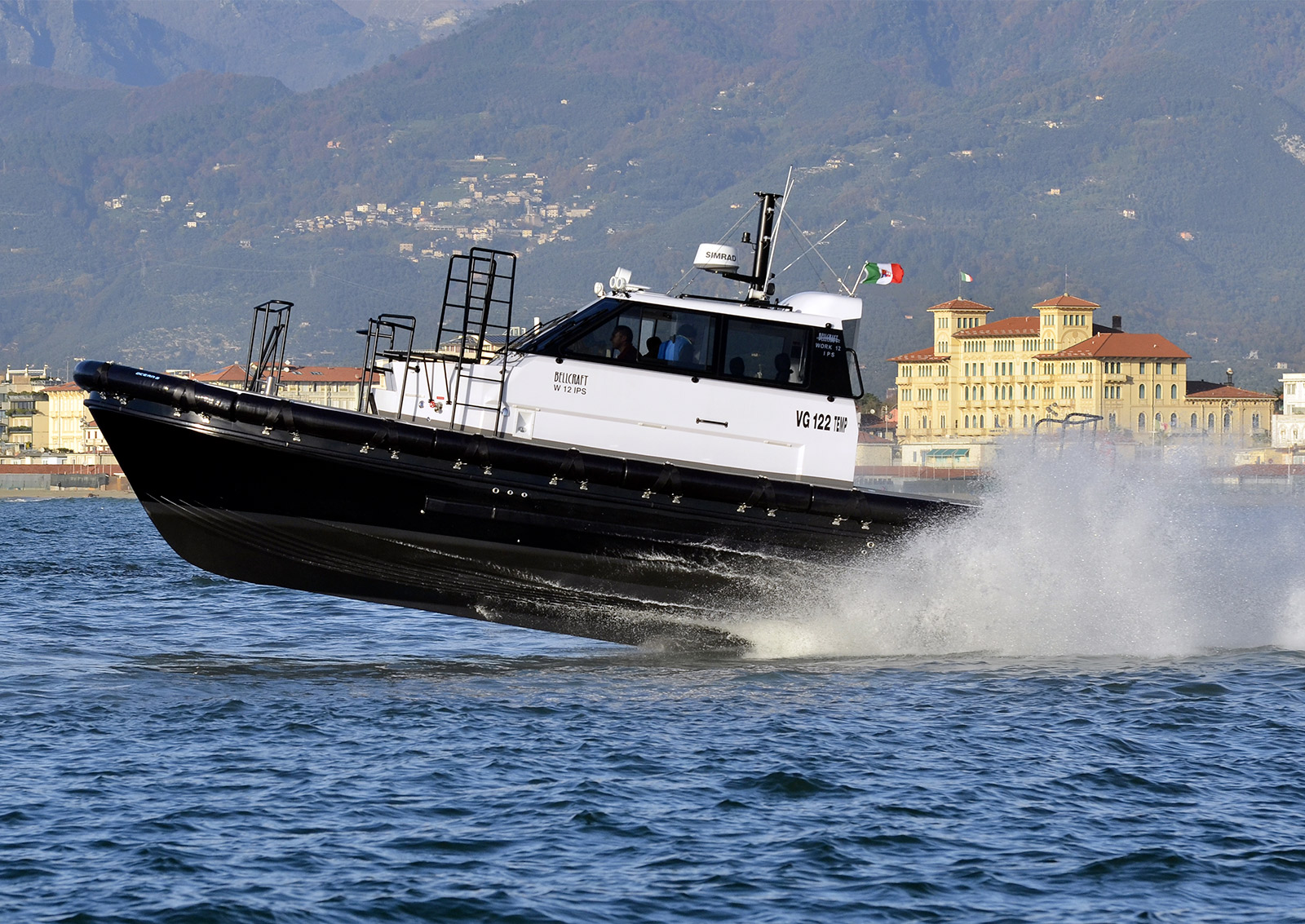
These and other considerations led to the development of a chine hull featuring a deep stem, pronounced volume in the upper forward sections, a straight sheer line that rises toward the bow, a generous freeboard, and a flattened stern section. The strakes along the chine are designed to provide sufficient lift aft, particularly when using IPS propulsion systems, and to deflect water away from the bow, ensuring a “dry” ride even in challenging sea conditions.
The design of the bow ensures an excellent entry into waves; it slices through them without the bow submerging, thanks to increasing upper volumes that provide upward buoyancy, thereby preventing jolts or violent impacts. The stern has been flattened, with straight longitudinal sections to facilitate an earlier transition to a planing state. While the design accommodates IPS propulsion, it is also fully compatible with traditional systems, such as straight-shaft drives, V-drives, or waterjets. We opted against including a keel skeg—a feature often found on vessels of this type—as it is unnecessary for this hull design; it would only create additional drag and reduce the vessel’s maneuverability. Directional stability, across all conditions and speeds, is achieved through the hull’s geometry and the precise distribution of weight.
The vessels produced have demonstrated excellent seakeeping and maneuverability at all speeds, as well as directional stability under all conditions and high top speeds (depending on the installed power)—characteristics observed across various propulsion configurations, including straight-shaft, V-drive, and IPS systems. Furthermore, we have incorporated a straight section into the central part of the hull, which allows for the insertion of a cylindrical module into the mold; this enables us to produce hulls ranging in length from 11.7 to 14 meters. All these boats can be equipped with advanced “intruder” systems to control longitudinal and transverse trim, as well as inertial stabilizers that eliminate rolling at any speed—a feature that also makes approaching another vessel safer.
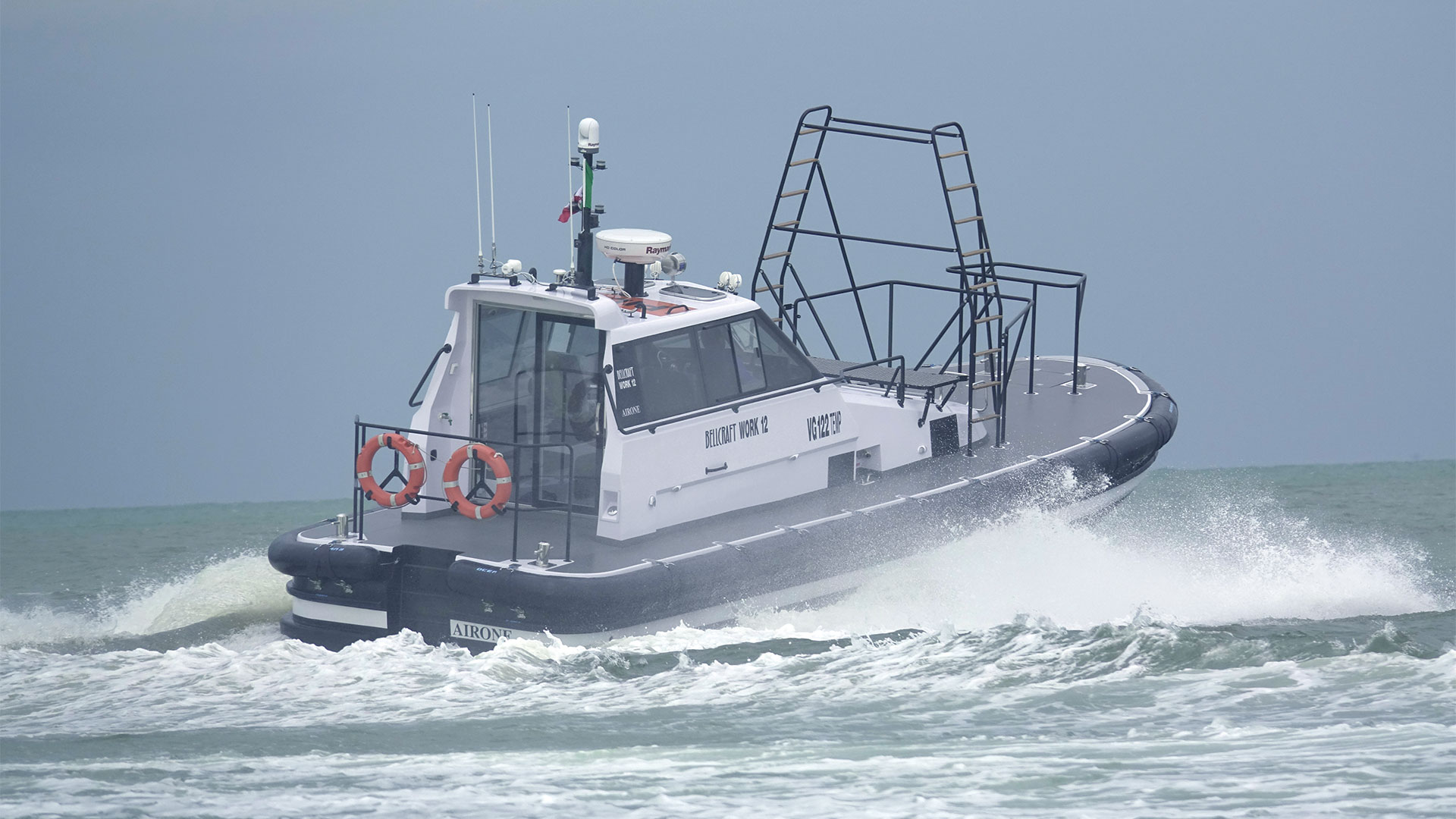

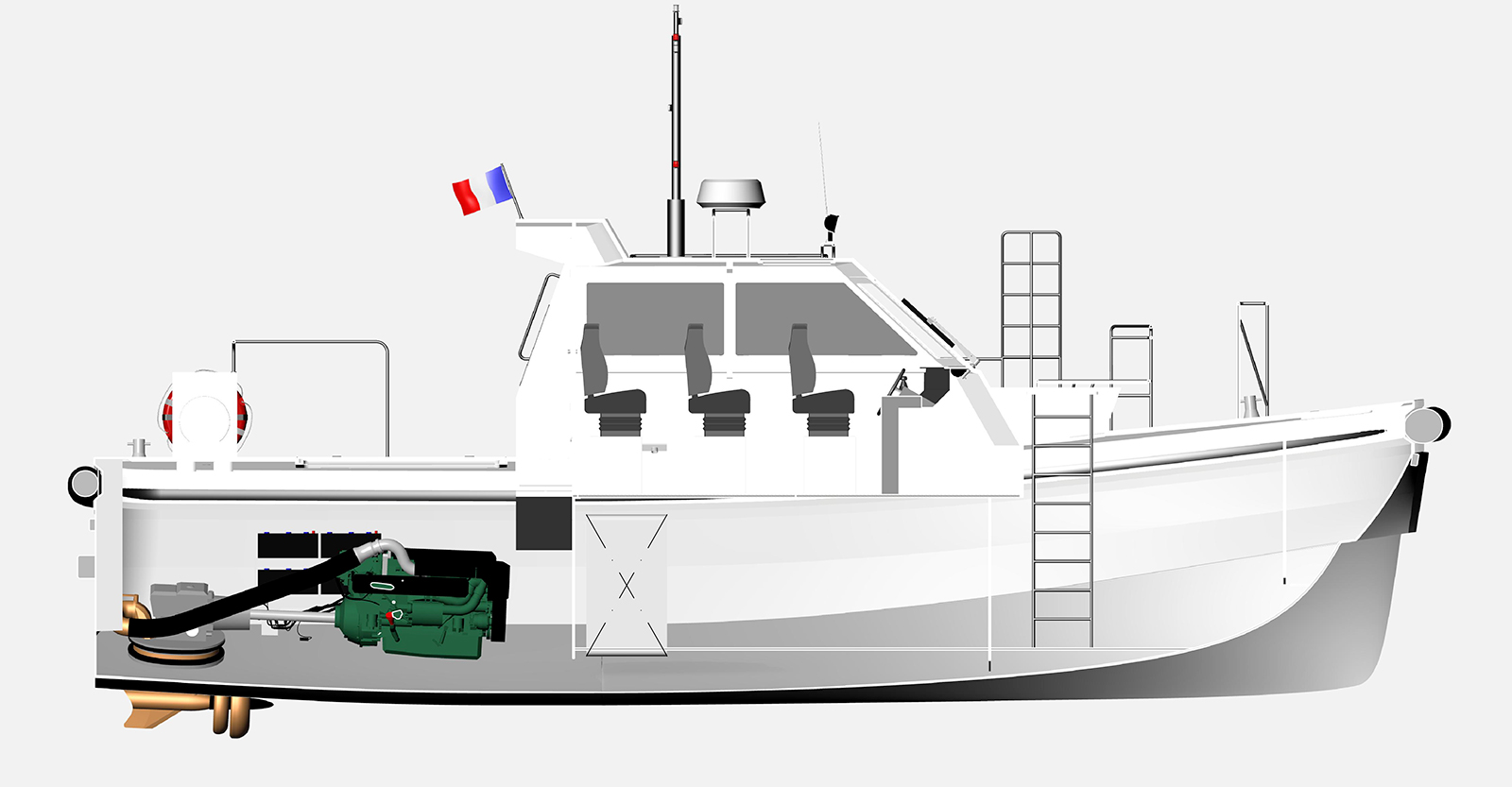
Regarding stability characteristics, which may vary slightly depending on the configuration, we have achieved excellent results, with metacentric heights above the average, while avoiding oscillation periods so short that they would make the vessel’s motion feel “stiff.” Naturally, inertial stabilizers and interceptors significantly enhance comfort, whether the vessel is stationary or underway at any speed. Our vessels meet all stability criteria mandated by classification societies and flag-state authorities. We do not offer “standard” configurations, as our clientele consists primarily of pilot or mooring associations, each with specific requirements dictated by the nature of their service and the environment in which it is performed. Consequently, every unit is designed according to the client’s specifications: hull length, the positioning and extent of the cabin, the type of propulsion, the specific engines and their power output, operational range, and so on. The structural components and hull plating are dimensioned to comply with classification society regulations, with additional reinforcement provided where necessary to suit the specific operational demands of each individual vessel.
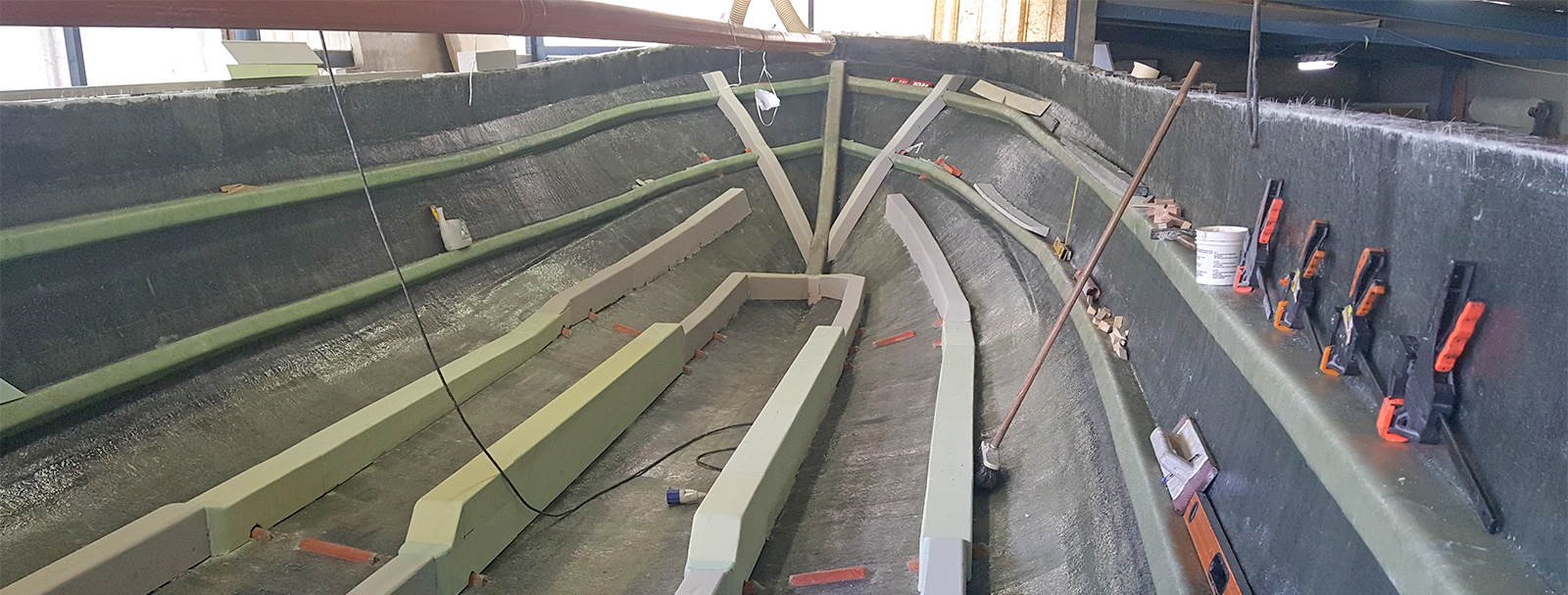
We carry out continuous monitoring throughout the lamination process to ensure that all required thicknesses and reinforcements—as specified for this type of vessel—are strictly maintained. Within the hull plating, a network of longitudinals and stringers creates a robust structure, capable of withstanding the most demanding operations.
All structural framing includes limber holes to allow for water drainage. The superstructures and deck are constructed using isophthalic resins in a sandwich configuration to enhance strength; furthermore, specific reinforcements—incorporating wood inserts—are applied at key stress points where hardware or accessories are to be installed.

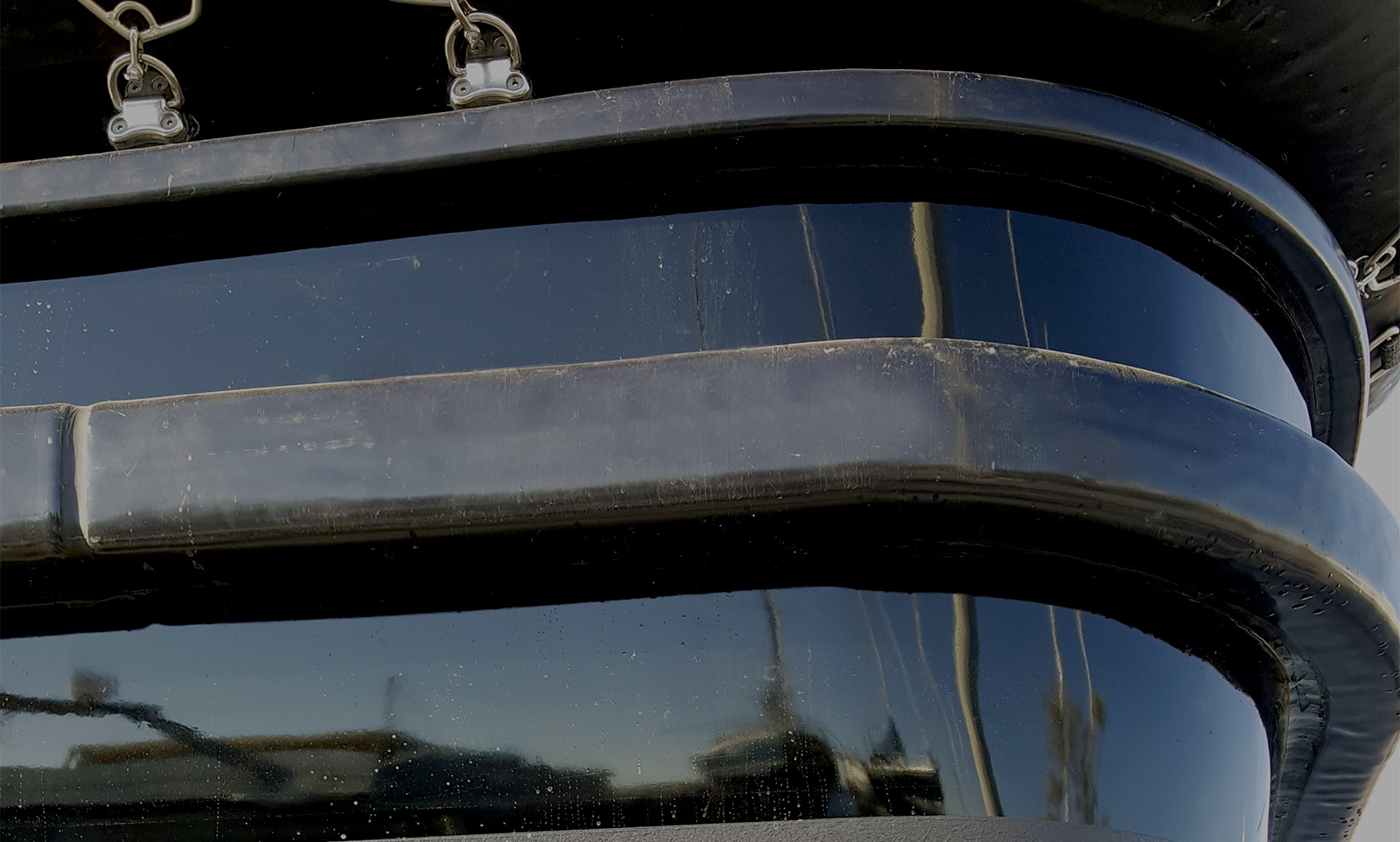
We use specialized foam fenders with a protective coating that helps distribute stress. The density of the foam, which may vary depending on the location, is calculated for each unit based on the kinetic energy it must dissipate, taking into account parameters such as displacement, speed, and primary dimensions. These fenders are secured to the vessel using cables and straps, making them easy to replace if damaged; they are also seated within a dedicated recess molded into the deck structure. Other foam-based, coated fenders are bonded directly to the vessel’s sides. Alternatively, traditional hard rubber fenders may also be used. The layout of the fenders is carefully planned and agreed upon with the client, tailored to the specific operational requirements of the vessel.
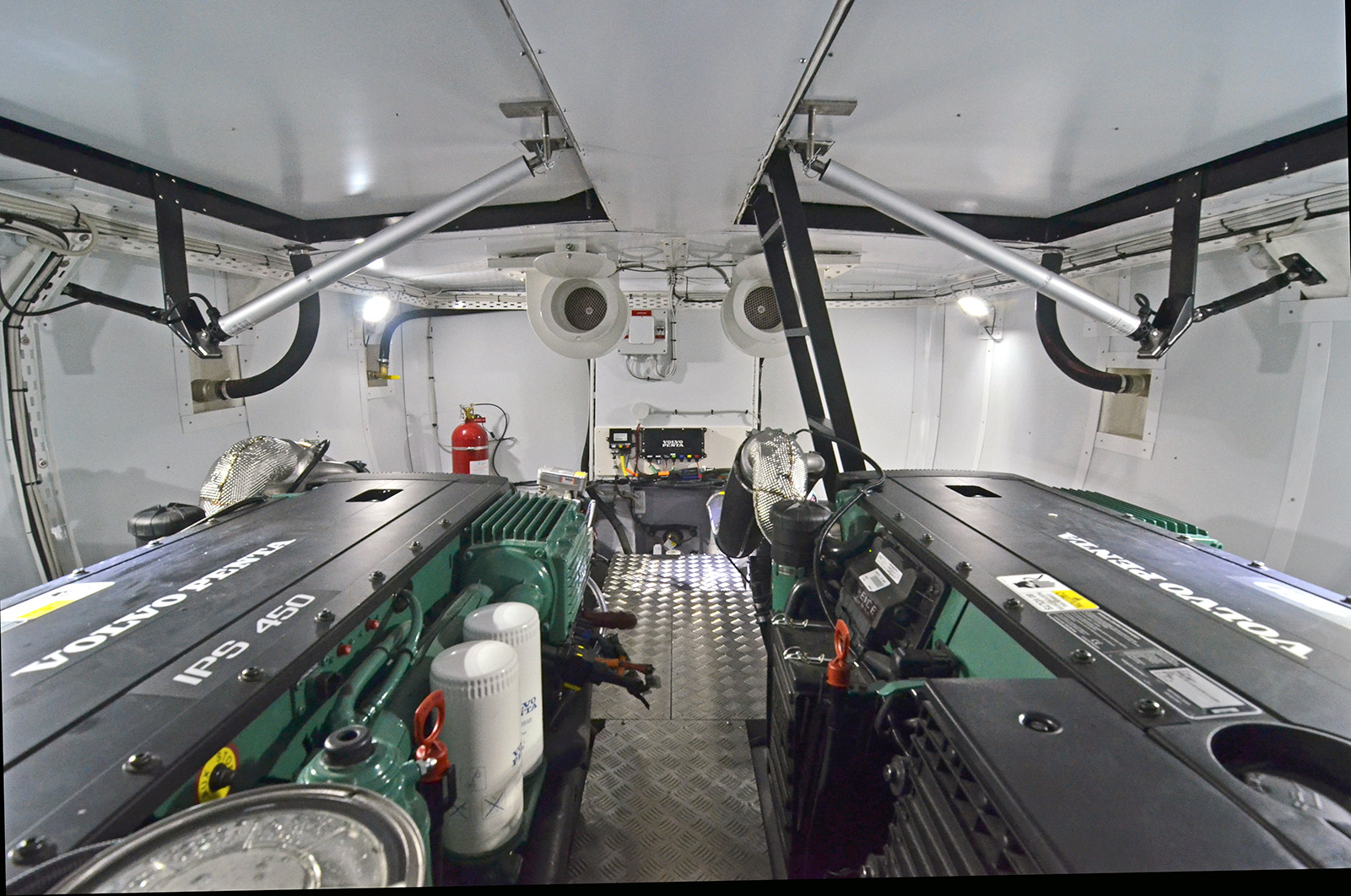
Special attention has been paid to the soundproofing of the engine room, resulting in a significant reduction in noise and vibration, most notably within the cabin. Inside, it is possible to converse and hear under near-normal conditions, even when traveling at high speeds. External noise levels are also kept to a minimum, well below the average for similar types of vessels. The cabin can be customized to meet the client’s specific requirements, including dimensions, positioning, interior fittings (such as benches or seats), the location of the helm station (starboard, port, or center), the size of the dashboard, and the layout of the instrumentation. All windows are bonded directly into recesses molded into the cabin structure. The arrangement of deck equipment—such as bollards, railings, grab handles, and pilot stands, is carefully planned and agreed upon with the client. Furthermore, the vessel can be equipped with man-overboard recovery systems, such as a movable stern platform or cable-based retrieval mechanisms.